




The Importance of Regular Diabetes Check-Ups for Blood Sugar Control
India has over 10 crore people living with diabetes. The number says it all. diabetes is a deceptively quiet health condition. You might feel perfectly fine while the damage from high blood sugar builds up inside.
Even if you are already diagnosed with Type 1 diabetes, Type 2 diabetes, or are at risk of developing diabetes, managing diabetes is not just about taking medication or avoiding sugary foods. It is an ongoing process that requires consistent monitoring, lifestyle adjustments, and timely medical care.
Also, routine health check-ups play a major role in keeping blood sugar levels under control and preventing complications. Let’s break down why those doctor visits matter so much and what they’re actually doing for you.
Why Blood Sugar Control Matters
Blood sugar, or glucose, is the body’s main source of energy. However, blood sugar levels should always remain within a healthy range for the body to function well. When blood sugar runs too high for too long, it directly affects your energy level. Not just that, uncontrolled diabetes can affect multiple organs and systems in the body, including the heart, kidneys, eyes, nerves, and blood vessels.
Diabetes that isn’t well managed can increase the risk of complications such as heart disease, kidney damage, vision problems, nerve damage, poor wound healing, and can also lead to stroke.
What makes diabetes a challenge is that blood sugar fluctuations are not always obvious. Many people go about their day feeling totally fine, even when their glucose levels swing outside the normal range.
Why Regular Diabetes Check-Ups Are Important
One of the major reasons to stay updated with the blood sugar level is that diabetes complications are far easier to prevent than to treat. During regular check-ups, you understand how well your diabetes is being managed and whether your current treatment plan is working effectively or not. Diabetic health conditions don’t appear overnight, they develop gradually.
Routine monitoring allows you to detect small variations before they turn into bigger concerns. And also, the options for intervening in the condition are much higher in the early stages of detection.
Here are some more convincing reasons why regular diabetes check-ups matter.
1. Helps Track Blood Sugar Levels Accurately
A regular clinical checkup provides you a complete and accurate picture of how your body is really managing glucose. Tests such as fasting blood sugar, post-meal blood sugar, and HbA1c cover both short-term and long-term glucose trends in your body. Especially the HbA1c test reflects your average blood sugar levels over the past 2–3 months. With this data, the doctor can see beyond the readings and guide you to a truly effective diabetes management plan.
2. Detects Complications Early
Diabetes-related complications build up quietly in the background. By the time you notice symptoms, the condition may have already progressed beyond control.
This is where routine check-ups earn their value. The regular checkup helps you identify warning signs early through blood tests, urine tests, eye exams, and kidney function assessments.
Early detection reduces the risk of serious complications and makes a huge difference in the course of the treatment.
3. Supports Better Medication Management
Diabetes isn’t something you start taking medication for and continue it for lifelong. It needs regular monitoring of how your body is responding to that medication. Periodically, your doctor adjusts the medication, insulin dosage, or treatment strategies according to your body’s current blood sugar level reading.
4.Encourages Better Lifestyle Management
When we say managing diabetes, it doesn’t simply include medications. The treatment plan also includes a few adjustments to your lifestyle. Proper diet, regular exercise, good sleep, and better stress management all have a major impact on blood sugar levels.
Regular checkups and constant monitoring help identify areas for improvement. Even small changes in daily routines can make a big difference in diabetes management.
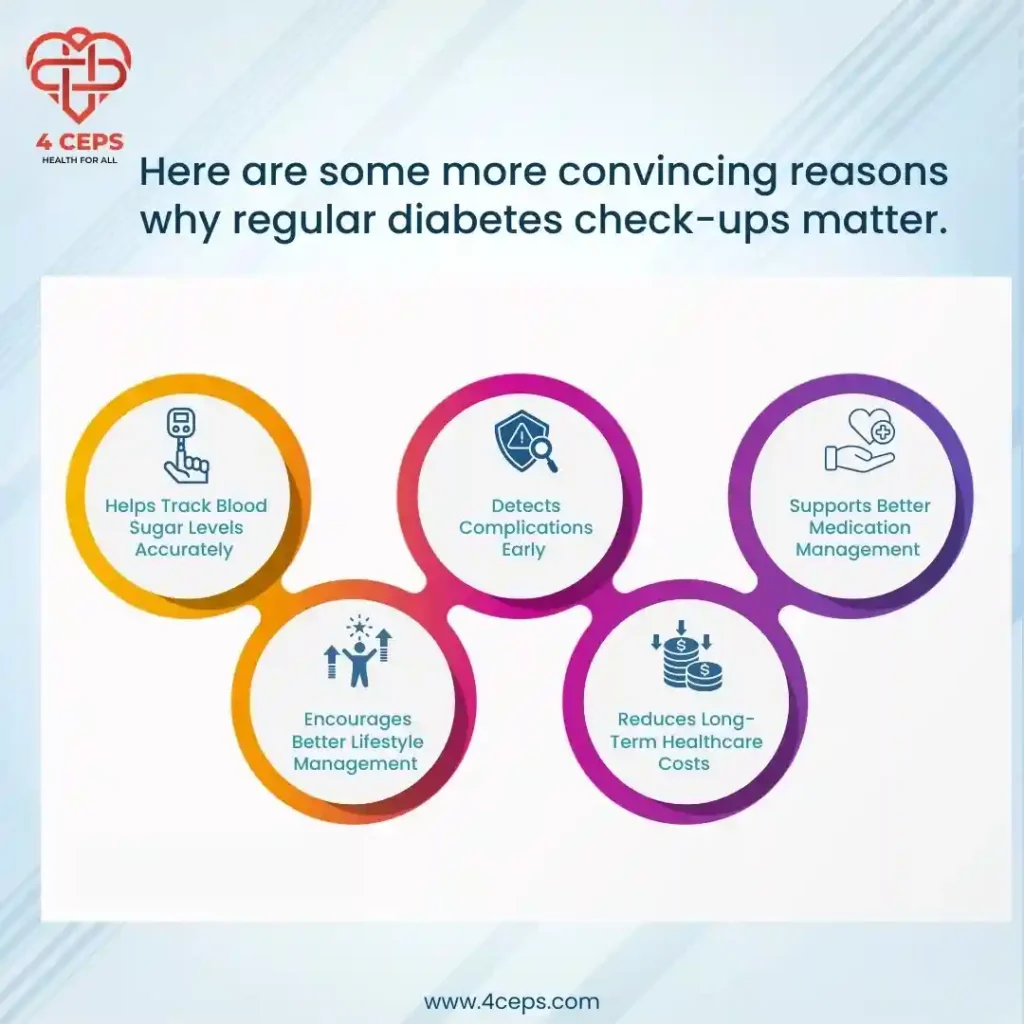
5. Reduces Long-Term Healthcare Costs
It would be surprising to know that regular check-ups help protect both your health and finances. Here’s how. Preventive care is often far more affordable than emergency care or long-term treatment for advanced diabetes-related conditions. Skipping regular monitoring can lead to expensive treatments later if complications develop.
Bottom line
Good blood sugar control is built on consistent action, and regular check-ups are a cornerstone of that. They keep small problems from becoming big ones, and they keep your care team informed and responsive.
If you’re due for a diabetes check-up or want to consult a specialist, 4CEPS makes it easy to find and book appointments.