



The Importance of a Second Opinion Before Starting Any Treatment
You are sitting outside the doctor’s room with the medical report in your hand, and also with a head full of questions. Getting diagnosed with a medical condition can feel overwhelming, and surgeries, invasive procedures, and heavy medications are the last things you want to go through unless they are truly necessary.
In moments like these, a second opinion acts as a safety check. By spending a few extra days getting another consultation can make you better informed about your condition and help you make the right decision.
Let’s talk about why getting a second opinion matters the most.
1.It helps you confirm the diagnosis
Let us all know that different doctors have different training, experience, and ways of approaching a medical condition. And every doctor interprets symptoms, scans, or test results slightly differently. While most diagnoses are accurate, there are situations where conditions can be misinterpreted.
A second opinion is like a second set of eyes that gives you a better shot at confirming whether the diagnosis is correct. If both doctors arrive at the same conclusion, it brings reassurance. If they don’t, it opens the door to explore the issue more deeply before moving forward with treatment and Healthcare services. Either way, a second opinion gives you a better idea about your condition.
2.You discover alternative treatment options
Medical treatment is not something like a ‘one-size-fits-all’. It is not a miracle when two equally qualified, experienced doctors look at your report and recommend two different treatment options. Some doctors suggest surgery, while others suggest medication. It’s the reality.
In such a scenario, seeking a second opinion introduces you to a wide range of alternatives and helps you better understand those instead of limiting yourself to just one path.
3.It builds confidence in your decision
This point has more of a psychological dimension. For almost all people, a medical procedure makes them anxious. It’s quite natural. Before committing to any treatment, especially major ones like surgery or long-term medication, they have to feel confident that they are making the right choice.
A second opinion can give you that confidence. Even if the second opinion matches the first one, it’s never a wasted effort. The confirmation from the second opinion reassures you that you are on the right track. And if the opinions differ, you gain more information to make a thoughtful, informed decision.
4.You understand your condition better
When you’re diagnosed with a health condition, you naturally start to Google everything about it. You read articles, ask questions, look for answers and try to connect the dots. But at the end, no search result can offer the same clarity as a conversation with a doctor.
When you consult another doctor, you’re likely to hear a fresh explanation of your condition. They might describe it differently, use simpler language, or focus on aspects that weren’t discussed earlier.
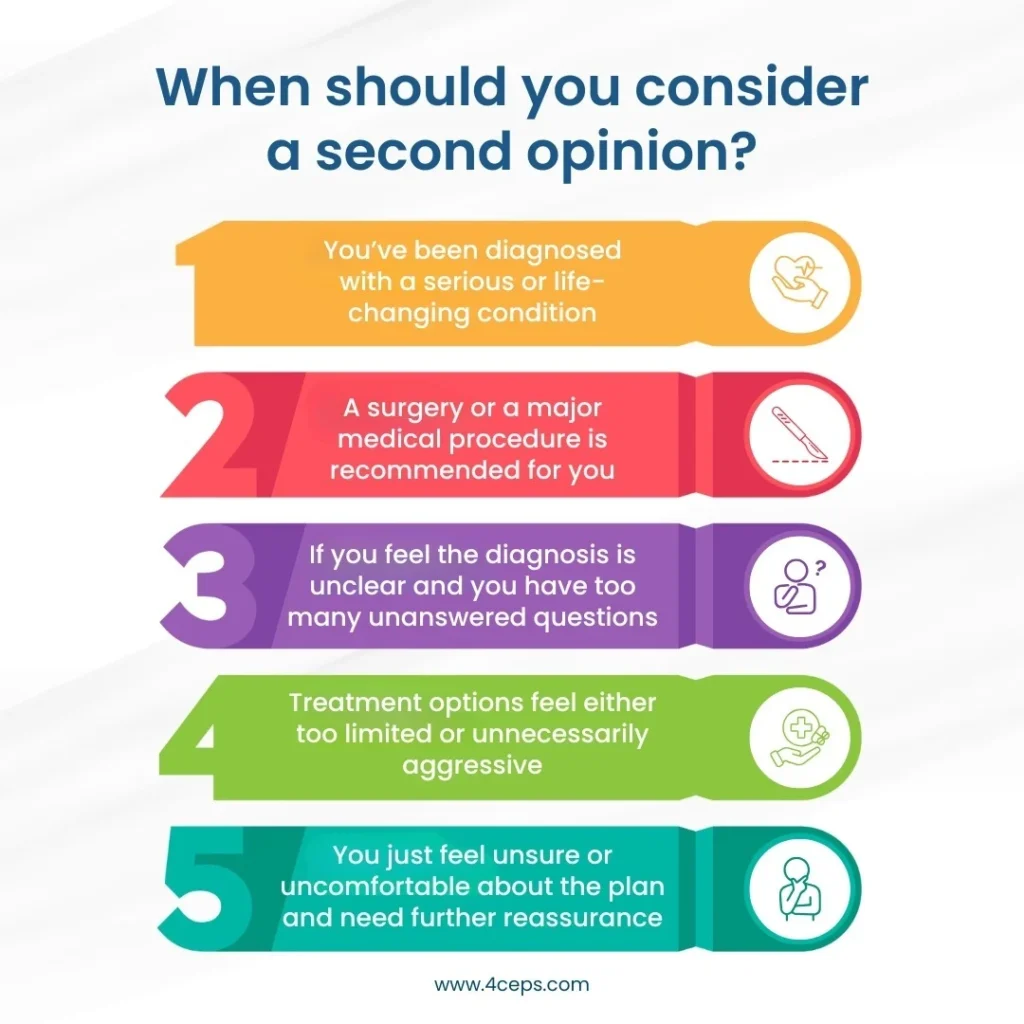
When should you consider a second opinion?
A second opinion can be sought at any point in your healthcare journey, but it becomes particularly valuable in certain situations.
- You’ve been diagnosed with a serious or life-changing condition
- A surgery or a major medical procedure is recommended for you
- If you feel the diagnosis is unclear and you have too many unanswered questions
- Treatment options feel either too limited or unnecessarily aggressive
- You just feel unsure or uncomfortable about the plan and need further reassurance
Bottom line
Your health is too important to leave room for doubt. Seeking a second opinion isn’t about questioning your doctor, it’s about giving yourself clarity, confidence, and control over your treatment decisions.
So if you ever find yourself hesitating before starting a treatment, take a step back, ask questions, and don’t hesitate to seek another perspective. Sometimes, that extra opinion makes all the difference.
FAQ
1. When should I consider getting a second opinion?
You should consider it when you’re diagnosed with a serious condition, advised surgery, unsure about your diagnosis, or if the treatment feels too aggressive or unclear.
2. Do I need to repeat all my tests for a second opinion?
Not always. Many doctors will review your existing reports and scans. However, in some cases, they may suggest additional tests for better clarity.
3. Will getting a second opinion delay my treatment?
In most cases, it doesn’t cause significant delays. Taking a little extra time to be sure about your treatment can actually help you avoid unnecessary procedures or complications later.
4. Will my doctor feel offended if I seek another opinion?
Most doctors won’t be offended. In fact, they often encourage it because it helps patients feel more confident and informed about their decisions.
5.When is the right time to seek a second opinion?
Ideally, before you begin any major treatment. The best time is after your diagnosis but before committing to surgery, long-term medication, or any irreversible procedure. Don’t wait until things go wrong.