How Doctor Consultation Helps in Early Diagnosis of Chronic Conditions
Most of us only head to the clinic when we feel terrible. It’s the obvious reality and completely understandable. We mostly brush off small symptoms like a persistent headache, mild fatigue, or a random ache, thinking it’s just the everyday tiredness or burnout. But what many of us don’t realise is that these small, seemingly harmless signs can sometimes be the body’s early warning system of certain chronic conditions. And this is why regular doctor check-ups make a huge difference.
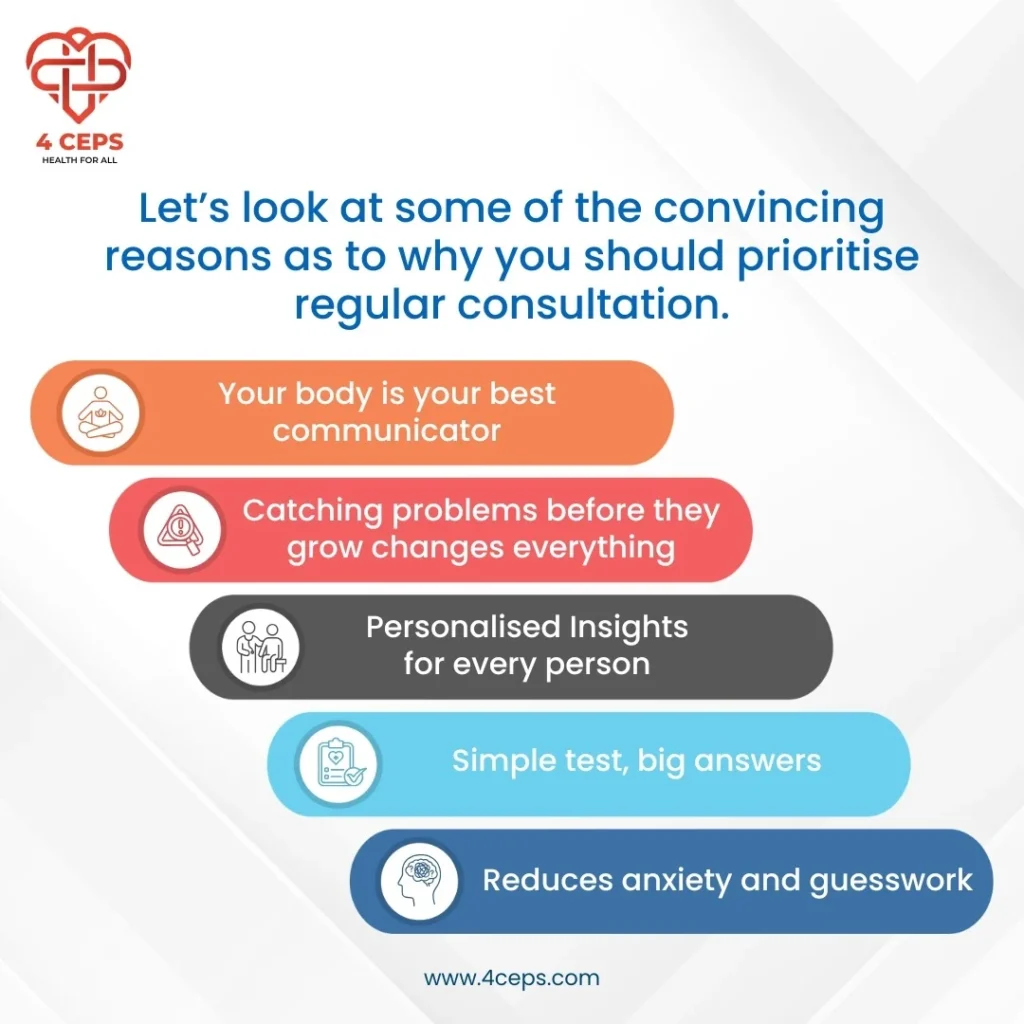
Let’s look at some of the convincing reasons as to why you should prioritise regular consultation.
1.Your body is your best communicator
Our body is constantly communicating with us, but the problem is that we are not keen on listening to it. A slight increase in thirst than usual, frequent tiredness, or even a subtle change in weight might not seem alarming on its own. We casually shrug it off and move on with our day-to-day life. Individually, these things barely feel worth checking in. But when looked at together, these minor things could point to something more significant.
That’s something a doctor is trained to recognise. Even during casual consultation, a doctor can connect these dots and identify patterns you might not have noticed. Conditions like diabetes, thyroid imbalance, and hypertension often announce themselves in exactly these small, easy-to-dismiss ways. The sooner those dots are connected, the better the chances of recovery.
2.Catching problems before they grow changes everything
One of the biggest advantages of regular consultations is early detection. Chronic conditions usually develop over time. And the hopeful part is that the most chronic cases are easier to manage if they are identified in the early stages.
For example, Pre-diabetes often has zero noticeable symptoms. You might feel completely fine, but when you do the test, it might tell a different story. A routine checkup can catch these silent factors early and help you take necessary action before they get complicated.
Early detection also means simpler, less expensive treatment and less chance of worsening the condition altogether.
3. Personalised Insights for every person
We’ve all done this. Whenever we encounter any mild symptoms, we instantly search for more about them online. But a Google search can only give you possibilities, while a doctor gives you clarity.
A doctor not just asks about your symptoms but also asks cross questions like your sleep, diet, stress level, lifestyle, medical history, and also your family history. Based on that, they give you personalized medical advice, which, of course, Google cannot give.
This personalized approach is what makes consultations so valuable.