Common Myths About Doctor Consultations – What People Get Wrong
Let’s be honest. Most of us don’t visit a doctor unless we really have to. We often hold ourselves back from consulting a doctor, thinking “maybe it’s nothing”, “maybe it’ll go away on its own”, “Let’s wait and see if it settles on its own”. We’ve all been in this situation for once and for real.
But here’s the thing: many of these beliefs about doctor consultations are simply not accurate. And those half-truths and assumptions end up doing more harm than good by keeping us away from the right care.
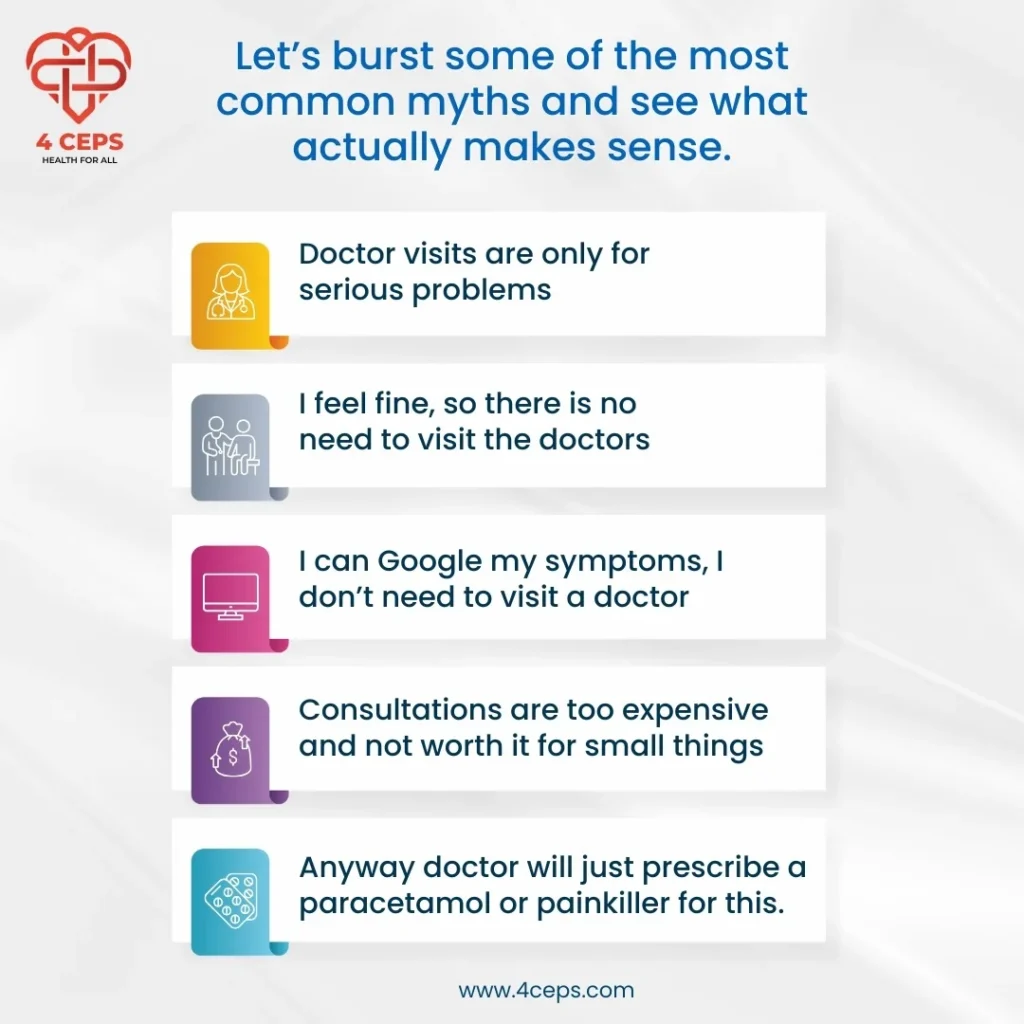
So let’s burst some of the most common myths and see what actually makes sense.
1. Doctor visits are only for serious problems
This is one of the most common misbeliefs. We mostly ignore little illnesses and slight variations in our body health and tend to visit doctors only for emergencies. Sometimes it works. But sometimes those small issues might be the early warning signs your body is giving to you.
For that reason, it is equally important to have regular checkups, even for minor concerns. They help catch any problems before they become serious. Also, regular checkups help monitor blood pressure, diabetes levels and the early stages of certain health conditions.
If you decide to wait until it feels really bad, you might miss the chance to treat those diseases early and easily. When it comes to your body, maintenance is far easier and better than repair.
2. I feel fine, so there is no need to visit the doctors
If you are feeling fine, then it is well and good. But this doesn’t necessarily guarantee that everything is fine inside your body. Certain health parameters, like high cholesterol, hypertension, prediabetes, or certain kidney issues, develop quietly without any obvious symptoms.
Routine blood work and check-ups are the only way to spot these hidden issues before they turn into something more serious. Your health works the same way as anything important in life. Regular check-ups help you stay on track and avoid things getting out of hand.
3. I can Google my symptoms, I don’t need to visit a doctor
This is the classic assumption. The moment we notice a minor symptom, we quickly turn it into hours of online searching and overthinking. The internet is great for general information, but it cannot understand you, your body, your lifestyle, or your health history.
Whereas a one-on-one conversation with a doctor can do that. They don’t just look at the symptoms, they look at the complete picture.
So yes, Googling can make you aware, but it can also confuse or scare you unnecessarily. A real consultation brings clarity that the internet simply can’t.